

Abstract Fine Art Photography
‘Abstract photography, for me, usually begins with something real that stops behaving quite as expected in a photograph.’
These pictures began with things I encountered rather than ideas about abstraction: grass moving in late light, a wooden jetty seen through repeated frames, points of light deliberately thrown out of focus, photographs made through a windscreen while travelling, and even the cotton rag paper I use for my prints.


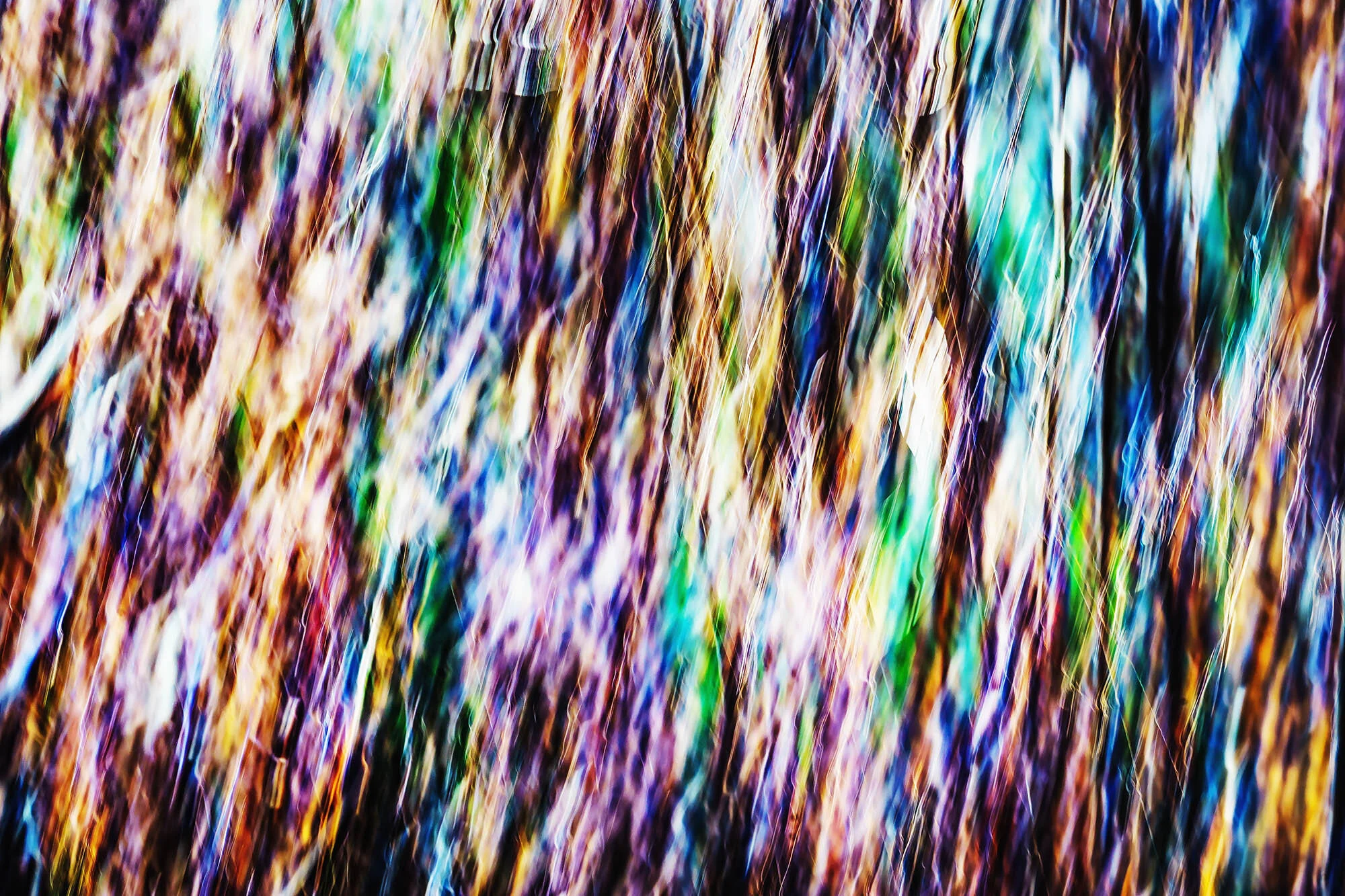


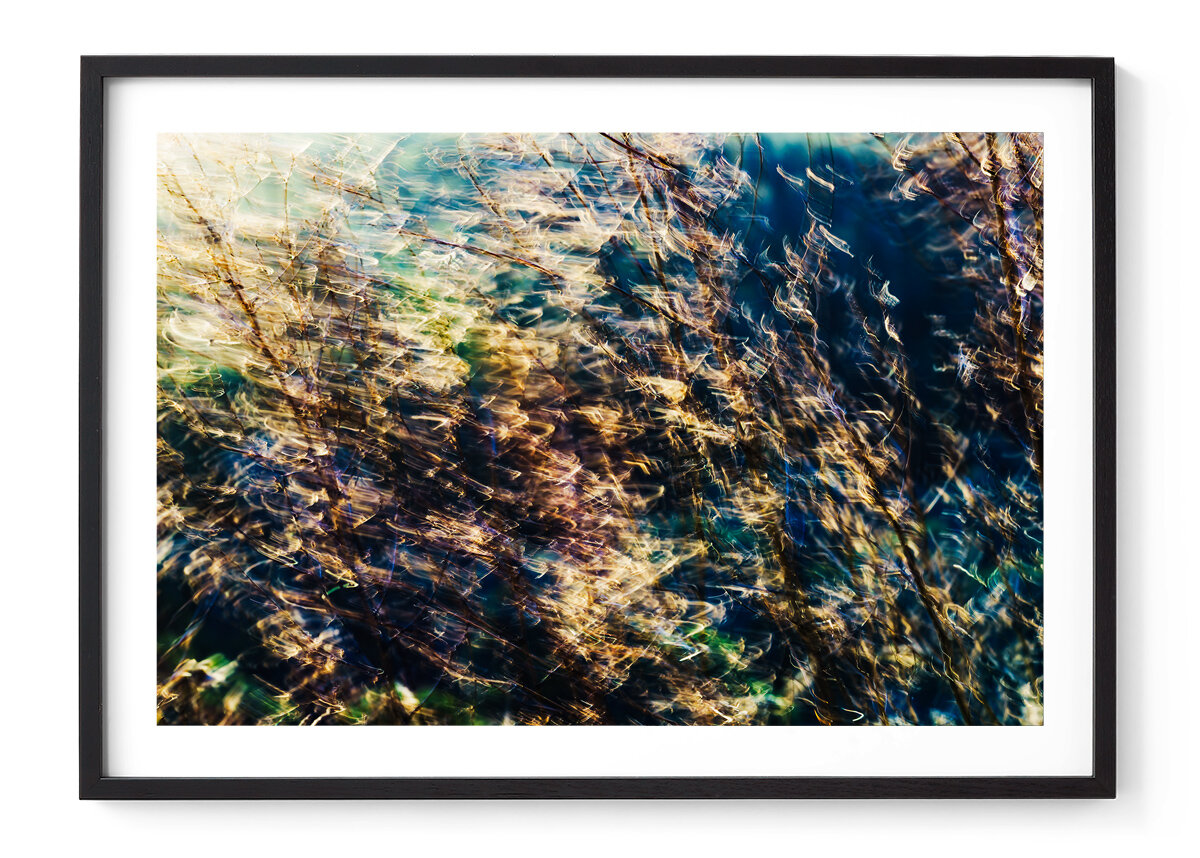


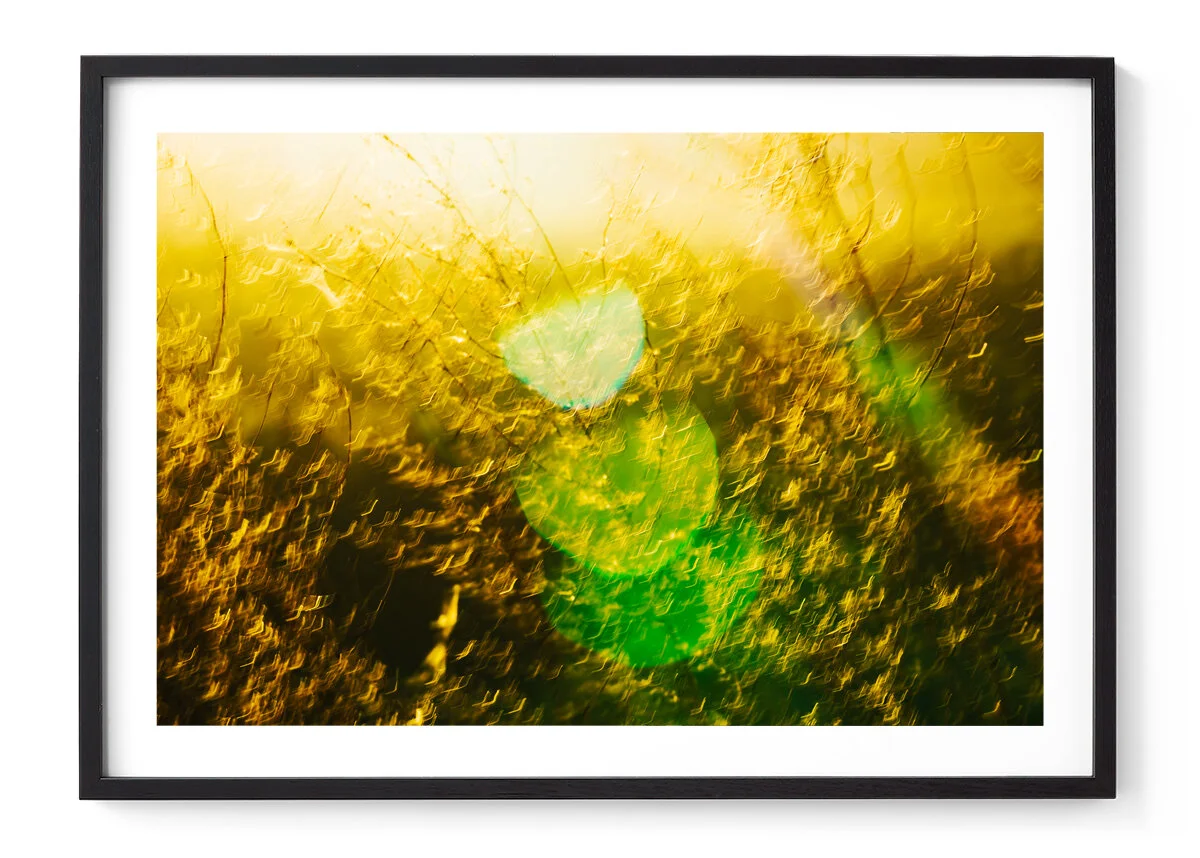


I am less interested in disguising the subject than in seeing what happens when light, movement, focus, repetition or material begins to take over from straightforward description.
The Rainbow Grass pictures are a good example. I had stopped beside a rural road one winter to photograph sheep on a distant hill. The setting sun was also passing through the long grass at my feet as it moved in the wind. What I had stopped to photograph was no longer the picture. Something else had presented itself.
That shift of attention is part of Finding Pictures—recognising when an ordinary subject offers another possibility.
Elsewhere, Fragmented uses repeated views of a wooden jetty until structure begins to break apart. Unfocused removes sharpness almost completely, leaving points of light to become the subject. Crumpled turns the cotton rag paper on which I make my prints into a photograph itself.
The road photographs came from journeys where movement, weather, changing light and the condition of the road became part of the picture. I sometimes return to these files years later and find something in them that I hadn't fully seen at the time.
For me, abstraction is less a style than another way of looking—watching what happens when a line moves, light loses its edges, space becomes uncertain or something familiar briefly becomes something else.